The Digital Transformation of Custom Manufacturing: Why Instant Quoting is the New Industry Standard
Automating and Layering AI into ERP Processes from End to End
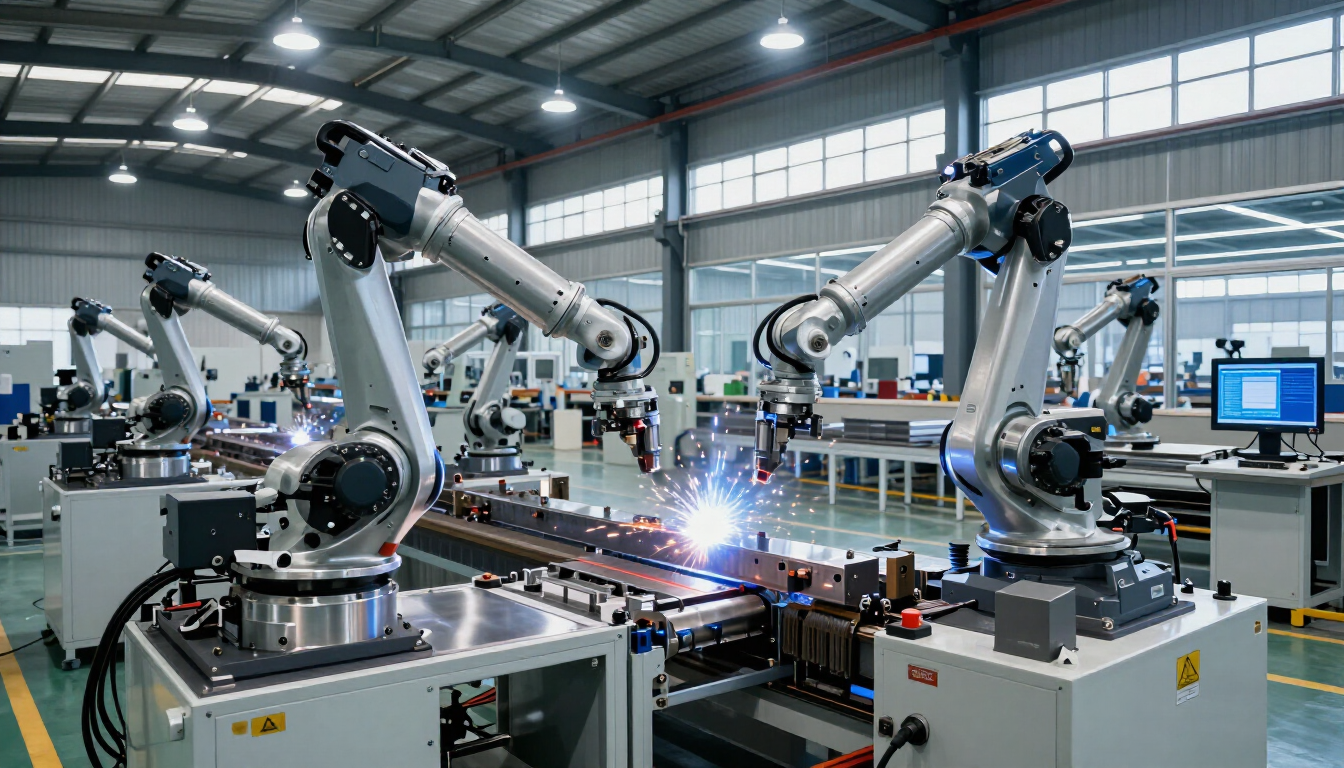
In the traditional landscape of sheet metal fabrication , CNC machining, injection molding, and other custom manufacturing services, the "Request for Quote" (RFQ) has long been a bottleneck. For decades, the process followed a predictable, slow-moving cadence: a customer sends a CAD file, an estimator reviews it manually, material costs are checked against current inventory, and a price is returned days later. However, a tectonic shift is occurring. Driven by the "Amazon-effect" on B2B expectations, the industry is moving toward a model where speed is not just an advantage—it is the baseline.
The Shift from Back-Office Task to Digital Sales Experience
Modern quoting is no longer viewed as a sequestered back-office function. Market leaders like Xometry and Protolabs have retrained customer expectations, proving that complex manufacturing requirements can be processed in real-time. This has transformed the quote from a static document into a dynamic digital sales experience.
For custom manufacturers, this shift requires a departure from manual spreadsheets. The current trend focuses on "Instant Quoting Platforms" that integrate directly with the shop’s internal logic. Industry data suggests that the shops winning the most contracts are often not the ones with the lowest price, but the ones that respond first. By the time a traditional shop returns a manual estimate, the digital-first competitor has already secured the order and moved the project into the production queue.
The Architecture of Instant Gratification
Building a platform that can accurately price a sheet metal part in seconds requires a sophisticated blend of front-end usability and back-end technical depth. Successful implementations generally focus on three core pillars:
- Design File Ingestion: The ability for a customer to drag and drop a file and have the system immediately recognize geometries, bend lines, and material volume.
- ERP-Driven Logic: Real-time integration with Enterprise Resource Planning (ERP) systems ensures that quotes reflect current material surcharges and shop capacity, preventing the "stale quote" syndrome.
- User Experience (UX) Parity: As engineers and procurement officers skew younger, they prefer self-service interfaces that mirror the ease of consumer software. High-fidelity interfaces that allow for version control and digital signatures are becoming the industry standard.
One of the most effective strategies for mid-market manufacturers is the hybrid development model. In this scenario, internal teams maintain control over the "secret sauce"—the proprietary pricing algorithms and ERP data—while external specialists build the customer-facing interface and workflow orchestration. This ensures security and accuracy while delivering a world-class user experience.
Moving Beyond the Basics: Collaboration as a Differentiator
While speed is the initial hook, the next frontier in manufacturing technology is digital collaboration. Early adopters are moving beyond the "one-and-done" quote toward platforms that allow for iterative design feedback. By providing a centralized hub where customers can view quote history, adjust material specs on the fly, and communicate with engineers, shops can move from being "vendors" to "partners."
Furthermore, the rise of AI-powered estimating is beginning to supplement human expertise. These systems can analyze historical job data to predict labor costs more accurately than a manual estimate ever could, allowing human estimators to focus on complex, high-value projects rather than routine low-volume work.
Looking Ahead: The Future of Frictionless Fabrication
The trajectory of the manufacturing industry is clear: the barrier between the customer’s design environment and the shop’s floor is dissolving. In the coming years, we will likely see the total automation of the "quote-to-cash" cycle for standard geometries and at least partial automation of more complex requests.
For manufacturers, the goal is no longer just to make parts, but to provide a frictionless conduit for engineering talent. Those who invest in the digital infrastructure to provide instant, transparent, and integrated quoting today will be the ones who define the market standards of tomorrow.
For many manufacturers, the opportunity is not simply to copy the large digital manufacturing marketplaces. The bigger opportunity is to bring that same level of speed, convenience, and transparency into their own customer relationships.
A custom quoting platform, custom to the business, allows a manufacturer to preserve its brand, pricing strategy, customer relationships, and internal process while still offering the kind of digital experience buyers now expect. Instead of sending prospects to a third-party marketplace, manufacturers can create their own direct quoting channel that keeps the customer relationship in-house.
This applies far beyond sheet metal fabrication. Similar quoting automation can be used across many types of custom manufacturing, including CNC machining, injection molding, laser cutting, tube bending, metal stamping, 3D printing, plastic fabrication, thermoforming, die casting, extrusion, powder coating, finishing services, custom assemblies, and made-to-order industrial components.
Each of these industries has its own quoting complexity. Injection molding may require tooling costs, resin selection, cavity count, cycle time, volume breaks, and mold maintenance assumptions. CNC machining may depend on material type, machine time, tolerances, part complexity, setup time, and finishing requirements. Sheet metal fabrication may involve bend counts, material thickness, cut length, nesting efficiency, hardware insertion, welding, and finishing. Even services like powder coating or finishing can benefit from automated pricing based on part size, surface area, color selection, masking requirements, batch size, and turnaround time.
The common thread is that customers want faster answers, and manufacturers need a way to provide those answers without sacrificing accuracy or margin. This is especially valuable for companies with repeat customers, specialized production capabilities, proprietary pricing logic, or strong regional relationships. An instant quoting system does not have to replace the human side of the business. It can enhance it by removing friction from routine requests and giving customers a faster path to action.
The Business Case for Instant / Rapid Response Quoting.
Speed-to-lead matters dramatically. Harvard Business Review found that companies responding to online leads within an hour were nearly 7x more likely to qualify the lead than companies that waited longer.
[https://hbr.org/2011/03/the-short-life-of-online-sales-leads]
The 5-minute benchmark is even more aggressive. The MIT / InsideSales lead response study found that the odds of contacting a lead drop about
100x and the odds of qualifying a lead drop about
21x when response time moves from 5 minutes to 30 minutes. [https://25649.fs1.hubspotusercontent-na2.net/hub/25649/file-13535879-pdf/docs/mit_study.pdf]
Manufacturing quoting has similar commercial behavior. A manufacturing case study from aPriori reports that Flex improved RFQ win rate from 15% to 68% after using simulated manufacturing to speed and standardize quoting. [https://www.apriori.com/wp-content/uploads/2023/05/Flex-and-aPriori-Case-Study.pdf]
Checkout/payment friction is a real conversion killer. Baymard’s ecommerce research reports an average cart abandonment rate of about
70%, with major abandonment reasons including unexpected costs, forced account creation, and checkout complexity. [https://baymard.com/lists/cart-abandonment-rate]
For manufacturing, payment capture does not need to mean full payment. A platform can allow a customer to approve the quote, place a deposit, authorize a payment method, or agree to a minimum charge before final engineering review. That reduces buyer drop-off while still protecting the shop from inaccurate automated pricing.
Starting with a Specific Use Case
The most successful implementations often begin with a focused use case. For example, a manufacturer may start with instant quoting for a specific category of parts, a common material type, a repeatable production workflow, or a product line that already follows predictable pricing rules. From there, the platform can expand into customer accounts, quote history, payment collection, file management, production handoff, CRM integration, and ERP-connected order management.
This phased approach makes the transition more practical. It allows the business to validate the quoting logic, improve the customer experience, and train internal teams without attempting to automate every possible scenario on day one.
Ultimately, instant quoting should not be viewed as a single feature. It is part of a larger digital transformation in how manufacturers sell, communicate, and move work through the business. The companies that embrace this shift will be better positioned to win customers, improve margins, reduce administrative bottlenecks, and create a more scalable sales process.
For custom manufacturers, the future belongs to the shops that can combine technical expertise with a modern buying experience. Fast, transparent, and connected quoting is becoming one of the clearest ways to do exactly that.
Learn more about custom solutions to automate end-to-end manufacturing sales processes including real time quoting, by
requesting a proposal or chat live with our team using the chat feature on this page.